Most people treat forgotten intentions as a character problem.
You meant to send the message. You meant to bring the charger. You meant to start a short practice later.
Then the day moved, and the intention stayed only in your head.
A 2022 review by Sam Gilbert and colleagues reframes that moment. Remembering delayed intentions is not only a brain-only skill. We also use calendars, diaries, strategically placed objects, and smartphone alerts. The authors call this intention offloading — outsourcing a delayed intention to an external tool (Gilbert et al., 2022).
That framing matters for mind care. A daily practice is itself a delayed intention: you decide to return, then life interrupts.
What the research actually shows
The review summarizes experimental work on how people choose between internal memory and external reminders. One clear pattern: reminders can dramatically change follow-through on demanding tasks.
In paradigms discussed in the review, mean accuracy using internal memory alone was typically around 50–60%. When people could use external reminders, accuracy was typically around 90–100%.
Same intention. Different support.
The point is not that everyone should live inside a notification storm. The point is that unaided memory is a limited tool for unfinished intentions — especially under load.
Why we under- or over-use tools
Gilbert and colleagues also show that offloading is a decision, not an automatic virtue.
Setting a reminder has a cost: time, effort, and attention. If you offload every trivial action, the system becomes noise. If you offload nothing, high-value intentions compete with everything else in working life.
The research suggests people are guided partly by metacognitive confidence — how sure they feel they will remember — and by context such as memory load and interruptions. Those decisions are systematic, but they are not perfectly calibrated.
So the practical skill is selective offloading: move the intentions that are easy to miss and costly to drop.
A better question than “Why am I so forgetful?”
Ask instead:
Which unfinished intention is still living only in my head?
Then choose one support:
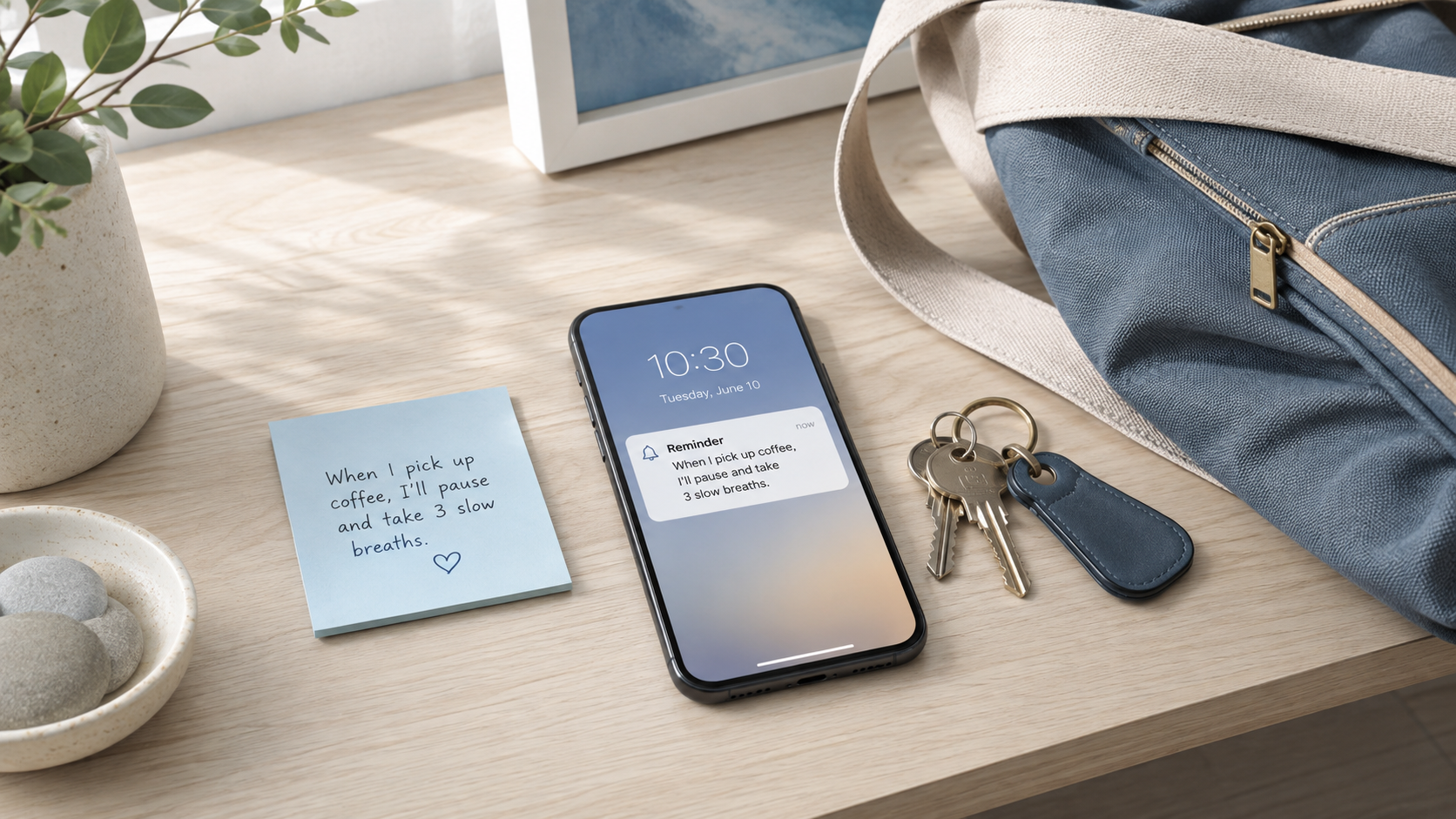
- Write the when + what on paper.
- Set one phone reminder with the action in the title.
- Place one related object where the action will happen.
That is intention offloading in ordinary language.
What this means for daily mind care
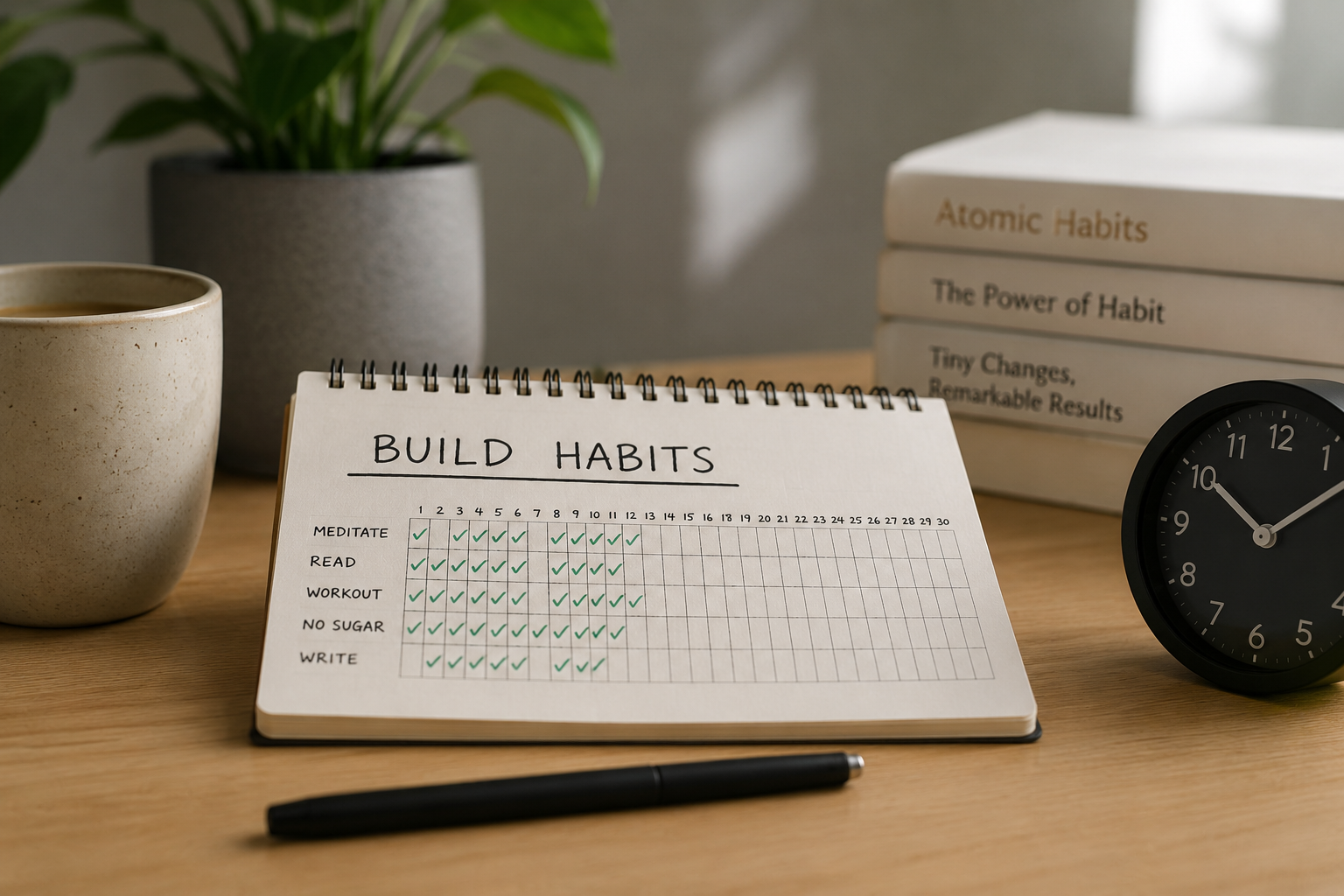
Braining Up is built around short practice, not an endless feed. Even a short session needs a return — a delayed intention to show up again.
Offloading can support that return without turning practice into pressure:
- Leave a sticky note on the fridge with one line: After coffee → one short session
None of that replaces the practice itself. It protects the intention to begin.
What this article is not saying
This is not a treatment plan, not a diagnosis pathway, and not a guarantee that reminders will “fix” memory. It is a plain-language summary of intention-offloading research you can use to make follow-through more realistic.
A one-minute practice you can try today
Pick one leftover intention for later today.
Write:
At __, I will __.
Put the paper where you will see it — or place one related object at the action point.
That is enough.
The better mind-care rule
Do not ask your brain to hold every unfinished intention alone.
Ask whether the important ones have a tool.
That is a calmer standard for daily practice than trying harder to remember everything unaided.
Sources
Gilbert, S. J., Boldt, A., Sachdeva, C., Scarampi, C., & Tsai, P.-C. (2022). Outsourcing Memory to External Tools: A Review of ‘Intention Offloading’. Psychonomic Bulletin & Review, 30, 60–76. https://doi.org/10.3758/s13423-022-02139-4